
Tuscany Travel Guide

Tuscany (Toscana) isn’t merely a region on a map of Italy; it’s a cultural super-brand, a landscape aesthetic that has informed Western imagination for centuries . For the academic-minded traveler or the curious tourist seeking depth beyond the typical snapshot, planning a journey here requires a structured, informed approach. This guide, therefore, adopts a scholarly lens, applying rigorous research methodologies to the art of travel.
We’ll move beyond simple lists of “must-see” attractions and delve into the why and the how of the Tuscan experience, ensuring your visit is not just seen, but truly understood. Drawing from recent studies in tourism management, consumer behavior, and regional analysis, we aim to equip you with the knowledge to navigate this complex and rewarding destination. The goal is to help you construct a personal narrative of discovery, one that is as intellectually satisfying as it is visually stunning.
Tuscany Travel Guide: Your Scholarly Roadmap to the Italian Renaissance Heartland
Deconstructing the Tuscan Allure: A Geographical and Cultural Overview
To appreciate Tuscany fully, one must first understand the foundational elements that contribute to its unique tourist attractiveness. This attractiveness, as defined by tourism scholars, results from a complex set of features and properties within both the natural and non-natural environment that stimulate interest and tourist traffic .
The Physical Landscape: From the Apuan Alps to the Tyrrhenian Sea
The region’s geomorphology is remarkably diverse. To the north-west, the Apuan Alps provide a dramatic, marble-studded backbone, while the rolling hills of the Chianti and Val d’Orcia regions present the quintessential postcard image of cypress-lined gravel roads and undulating fields. This central area transitions towards the coast, meeting the Tyrrhenian Sea with its sandy beaches and marshlands like the Maremma. This diversity isn’t just scenic; it dictates agricultural practices—from the olive groves on every hillside to the vineyards that produce world-class wines—and, consequently, the regional cuisine you’ll encounter.
A Cradle of the Renaissance: Historical Context for the Modern Traveler
Tuscany’s historical and artistic patrimony is staggering. It is widely considered the cradle of the Renaissance, a period that fundamentally reshaped Western art, science, and thought. This concentration of masterpieces presents a unique challenge: the risk of “museum fatigue” or a superficial, checklist approach to cultural consumption. Understanding the historical rivalries between city-states like Florence, Siena, and Pisa enriches the experience. When you stand in the Piazza del Campo in Siena, for instance, you’re not just in a pretty square; you’re standing on the floor of the medieval republic’s “theater of power,” a space designed for civic pride and political spectacle. This historical context transforms a visit from passive observation to active interpretation.
Methodologies for Itinerary Planning: A Structured Approach
Effective itinerary planning is a crucial pre-departure task. It requires a methodological approach akin to drafting a research proposal: you must define your thesis (the purpose of your trip) and your research questions (what you hope to discover).
Defining Your Travel Persona: The Art Historian, The Epicure, or The Leisurist
Before you even consult a map, consider your primary motivation. Are you the Art Historian, seeking to trace the development of painting from Giotto to Michelangelo? Your itinerary will logically center on Florence’s Uffizi Gallery and the Brancacci Chapel. Are you the Epicure, for whom the quality of food and wine is paramount? Then your focus should be on the winescapes—the vineyards, agriturismi, and market towns of Chianti and Montalcino . Or are you the Leisurist, drawn by the promise of picturesque views and relaxation? Your journey might prioritize the thermal baths of Bagno Vignoni and the serene landscapes of the Val d’Orcia. Most travelers are a hybrid, but identifying your dominant persona provides a clear framework for making choices.
Temporal Considerations: Optimal Windows for Visiting
Academic research into tourist flows consistently highlights the importance of timing. The “shoulder seasons”—spring (April to mid-June) and autumn (September to October)—are widely acknowledged as the optimal windows for visiting Tuscany.
Shoulder Season Advantages for the Academic Traveler
These periods offer a confluence of benefits. The weather is generally mild and pleasant for walking, the major sites are less congested than the peak summer months, and you can often find more favorable accommodation rates. Furthermore, autumn aligns with the grape harvest (vendemmia), offering a unique, firsthand glimpse into the region’s wine-producing cycle . Visiting in, say, late September allows you to witness the very process that puts the wine in your glass, a direct connection to the land that a July visit cannot replicate.
The Principal City-States: An Analysis of Florence, Siena, and Pisa
No Tuscany Travel Guide would be complete without a detailed analysis of its principal urban centers. Each functions as a distinct historical entity, a former city-state with its own unique character and artistic DNA.
Florence (Firenze): The Epicenter of Artistic Patrimony
Florence is the undisputed heavyweight. The Cathedral of Santa Maria del Fiore, with Brunelleschi’s iconic dome, is consistently rated as the top attraction in the entire region by both residents and international tourists . However, the city’s popularity is also its biggest challenge. To engage with Florence academically is to strategize. Pre-booking tickets for the Uffizi and Accademia is non-negotiable. Consider, too, the “lesser” churches—Santa Maria Novella or Santa Croce—which are museums in their own right, often without the same overwhelming crowds. The goal is to see the art, not just the queue.
Siena: A Study in Preserved Medieval Urbanism
If Florence represents the Renaissance, Siena embodies the medieval ideal. Its shell-shaped Piazza del Campo, another top-rated site, is a masterpiece of urban design . A visit to Siena is an exercise in atmospheric immersion. The city’s historic center, a UNESCO World Heritage site, has been preserved with remarkable integrity. Wandering its hilly, narrow alleyways, you can feel the palimpsest of history. The Siena Duomo, with its striped marble and Piccolomini Library, offers a powerful counterpoint to Florentine aesthetics, showcasing a distinct, more Gothic sensibility.
Pisa: Beyond the Leaning Tower—A Maritime Republic’s Legacy
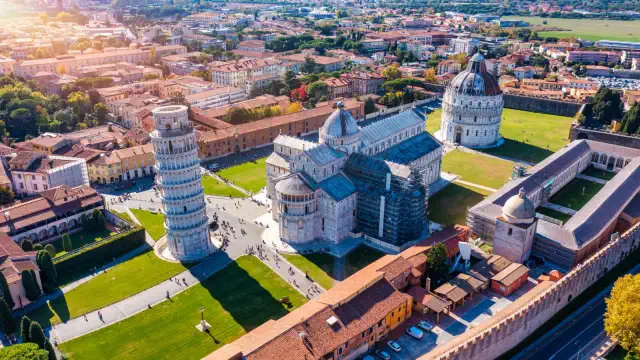
Pisa suffers from its own success. The Leaning Tower, part of the Piazza dei Miracoli (Square of Miracles), is a global icon, drawing visitors by the busload . The risk is seeing the Tower, taking the obligatory photo, and leaving. A more scholarly approach involves recognizing Pisa’s history as a powerful maritime republic. The same square contains the Cathedral and the Baptistery, Romanesque masterpieces that speak to the city’s medieval wealth and global connections. Crossing the Arno into the lesser-explored districts reveals a quieter, more authentic Pisan life.
The Winescape of Tuscany: An Enological and Gastronomic Field Study
The concept of the “winescape” is central to understanding modern Tuscan tourism. It’s not just about drinking wine; it’s about the holistic experience of the landscape, the villages, and the culinary traditions that surround the product .
The Chianti Classico Region: A Case Study in Terroir
The area between Florence and Siena, the heart of Chianti Classico, is a living laboratory of terroir—the environmental factors that give a wine its unique character. Here, the Sangiovese grape expresses itself differently depending on the altitude and soil composition. Visiting a family-run estate like those near Greve or Radda offers more than a tasting; it’s an education in viticulture and the generational knowledge that goes into every bottle. The integration of wine with food, landscape, and historic villages is the key strength of a successful wine tour .
Brunello di Montalcino and Vino Nobile di Montepulciano
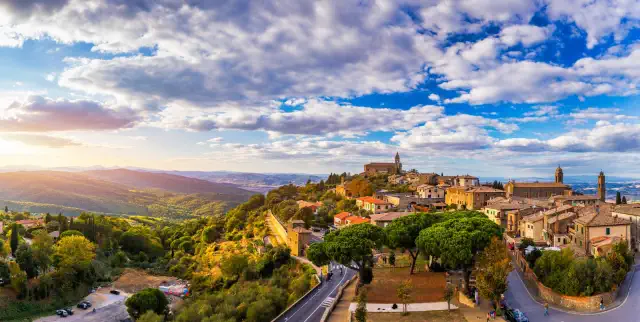
Further south, the hilltop towns of Montalcino and Montepulciano produce two of Italy’s most celebrated reds. A visit here is a deeper dive into specialization. Brunello, made from 100% Sangiovese (known locally as Brunello), requires a minimum aging period that speaks to the patience and craft involved. Exploring the fortress at Montalcino or the Renaissance temples of Montepulciano provides a perfect counterpoint to the sensual pleasures of tasting. These towns themselves are integral parts of the winescape, their stone and brick echoing the structure and depth of the wines they produce.
The Role of the Tour Guide in Consumer Satisfaction
Recent academic research underscores a critical, often overlooked element: the tour guide. Studies analyzing thousands of TripAdvisor reviews for Tuscan wine tours reveal that the guide plays a “fundamental role in consumer satisfaction” . Their communication skills, knowledge, and ability to facilitate a connection between the visitor and the place are as important as the quality of the wine itself . When booking an experience, consider the guide as a key variable. A knowledgeable guide doesn’t just show you a cellar; they unlock the story of the family, the region, and the vintage.
Beyond the Tourist Gaze: Hidden Gems and Off-the-Beaten-Path Destinations
While the principal cities are essential, the “hidden gems” of Tuscany offer a different kind of reward: a more intimate and personal connection with the region’s past and present. These are the places that can become the highlight of your journey, providing a counter-narrative to the crowded city centers .
Pitigliano and the Etruscan Legacy: “Little Jerusalem”
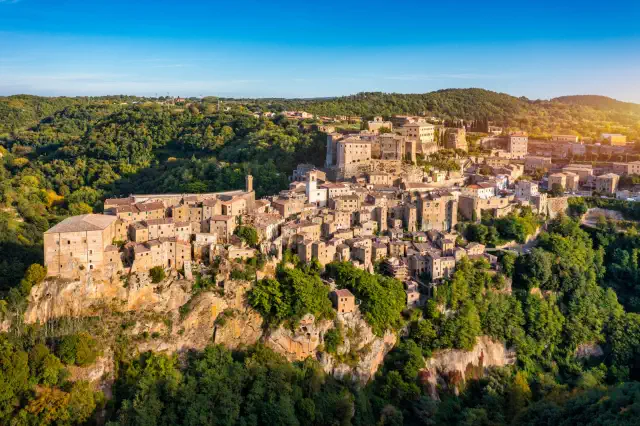
Perched dramatically on a tuff rock ridge in southern Tuscany, Pitigliano is a sight to behold. Its ancient alleyways and buildings carve directly into the stone evoke a deep sense of history, dating back to Etruscan times . Known as “Little Jerusalem” for its historic Jewish community, the town offers a unique cultural synthesis. Exploring the Jewish Ghetto and the Orsini Fortress provides a tangible link to the layers of civilization that have shaped this land.
Bagno Vignoni: A Thermal Village in the Val d’Orcia
Imagine a village square. Now, instead of paving stones, imagine it filled with a large, warm thermal pool. That’s Bagno Vignoni. This unique village, located in the heart of the Val d’Orcia, has been a site of thermal relaxation since Roman times . The central pool is no longer for bathing, but its presence defines the atmosphere. You can stay in hotels that channel the thermal waters or simply walk through the Parco dei Mulini, with its ancient mills, feeling a profound sense of tranquility.
Montefioralle: A Microcosm of Chianti Life
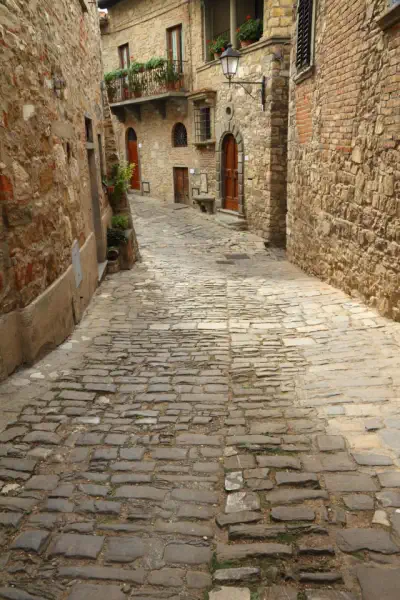
Often cited as one of Italy’s most beautiful villages, Montefioralle is a tiny, perfectly formed hilltop hamlet near Greve in Chianti . It’s less a destination with specific “sights” and more a place to simply be. Walking its concentric cobblestone alleys, you’re enveloped in an atmosphere of timeless rural life. The views from its perimeter offer sweeping panoramas of the surrounding vineyards—a microcosm of the entire Chianti experience, distilled into a peaceful, walkable loop.
Practicalities and Logistics: A Synthesis of Travel Requirements
The theoretical framework of your journey must be grounded in practical realities. Navigating Tuscany requires strategic decision-making.
Navigational Strategies: Automobile vs. Rail Transport
The choice between car and train is a classic dilemma. For exploring the major cities—Florence, Pisa, Siena—the train system is efficient and convenient, saving you from the nightmare of city-center parking. However, for accessing the hidden gems and winescapes of the countryside—Pitigliano, Montefioralle, the Chianti backroads—a car is indispensable. It grants you the freedom to stop at a panoramic viewpoint on a whim or visit a tiny hilltop village not served by public transport. The optimal strategy for many scholars of travel is a hybrid: use the train to move between major hubs and rent a car for dedicated excursions into the rural interior.
Accommodation Typologies: From Agriturismo to Historic Residences
Your choice of lodging can profoundly shape your experience. An agriturismo (a working farm offering accommodation) is not just a place to sleep; it’s an immersive experience in the rural economy, often with home-produced food and wine . Conversely, a hotel in a historic palazzo in Florence or Siena places you in the heart of the urban narrative. The decision should align with your travel persona.
A Comparative Analysis of Lodging Options
| Typology | Characteristics | Best Suited For… | Keywords for Search |
|---|---|---|---|
| Agriturismo | Working farm, rural setting, often includes meals. | Epicures, families, those seeking tranquility. | “agriturismo Tuscany with cooking class,” “farm stay Val d’Orcia” |
| Historic Hotel/Palazzo | Central location, period architecture, concierge service. | Art historians, first-time visitors, luxury seekers. | “hotel Florence historic center,” “palazzo Siena accommodation” |
| B&B / Guesthouse | Intimate, often family-run, personal touch. | Couples, solo travelers, budget-conscious academics. | “B&B San Gimignano,” “guesthouse Montepulciano” |
| Villa Rental | Private, spacious, ideal for groups. | Families, groups of friends, long-term stays. | “villa rental Tuscany pool,” “Chianti villa for 10” |
La Pievina is a family-run farmhouse with swimming pool in the Tuscan countryside, 1.9 mi outside Montepulciano. Set in 25 acres of private farmland, it has panoramic views of the surrounding hills and vineyards.
Offering views of Arno River and Ponte Vecchio, the 4-star Hotel Berchielli is centrally located in Florence, on the riverfront. It serves a varied breakfast buffet including many local products.
B&B San Gimignano Diffuso offers rooms and apartments in different buildings, both in San Gimignano’s historic center and outside the town walls.
Sole del Chianti in Tavarnelle in Val di Pesa offers a spacious villa housed in a historic building. The property features 10 bedrooms and nine bathrooms, ensuring ample space for all guests.
Digital Preparedness: Mobile Optimization and Connectivity
In an age where travel information is consumed on the go, ensuring your digital tools are ready is a key logistical step. Many travelers use mobile devices to search for “restaurants near me” or “hidden gems in Tuscany” while already on location . Before you depart, download offline maps of the region on your preferred app. Save digital copies of bookings, museum tickets, and important addresses. A pocket Wi-Fi device or a local SIM card can be invaluable for navigating rural areas where connectivity might be spotty, ensuring you can always access your digital research.
Frequently Asked Questions (FAQs) Regarding Travel to Tuscany
From a climatological and tourist-flow perspective, the optimal periods are the shoulder seasons: late spring (May to mid-June) and early autumn (September to October). You’ll enjoy mild temperatures ideal for walking, lower accommodation rates, and significantly fewer crowds than the peak summer months of July and August .
This depends entirely on your itinerary. Public trains and buses are excellent for connecting the main cities like Florence, Pisa, and Siena. However, to truly explore the winescapes and hidden hilltop villages of the Chianti or Val d’Orcia, a car is highly recommended for its flexibility and freedom.
In Florence, the Uffizi Gallery and the Accademia Gallery (home to Michelangelo’s David) require advance reservations, often weeks or months in peak season. Similarly, climbing Brunelleschi’s Dome has limited capacity and sells out. For popular wine tours or cooking classes, booking ahead is also wise, especially during harvest season.
An agriturismo is a working farm or agricultural estate that provides lodging and often meals. Choosing one allows for an immersive experience in Tuscan rural life, often including home-produced wine, olive oil, and food. It’s a fantastic way to connect with the land and its culinary traditions .
Tuscany can be adapted to various budgets. Accommodation is often the largest expense. For a mid-range trip, expect to pay €100-€200 per night for a decent hotel or B&B. A meal in a trattoria with wine might cost €25-€40 per person. Museum entrance fees are typically €10-€20. Budgeting for a special wine tasting or cooking class is also recommended.
This involves a shift in methodology. Slow down. Don’t try to see everything. Spend a morning in a local market. Learn a few basic Italian phrases. Stay in a smaller town or an agriturismo. Choose one or two in-depth guided tours led by knowledgeable locals who can share context, rather than just a list of facts . Focus on quality of experience over quantity of sights.
Synthesizing Your Tuscan Narrative
Ultimately, a journey through Tuscany is an act of synthesis. It’s the art of combining the grandeur of Florence with the intimacy of Montefioralle, the structured complexity of a Brunello with the simple pleasure of a sunset over the Val d’Orcia. By approaching your travel planning with the mindset of a researcher—asking questions, seeking context, and understanding the underlying systems of landscape, history, and culture—you move beyond the role of passive consumer. You become an active participant in creating your own unique Tuscan narrative. And that narrative, woven from the threads of art, food, wine, and landscape, is the most valuable souvenir you can bring home. So go, explore, question, and savor. La dolce vita awaits your inquiry.